


Hantavirus Explained: Symptoms, Causes, Spread, Treatment & Prevention — Everything You Need to Know
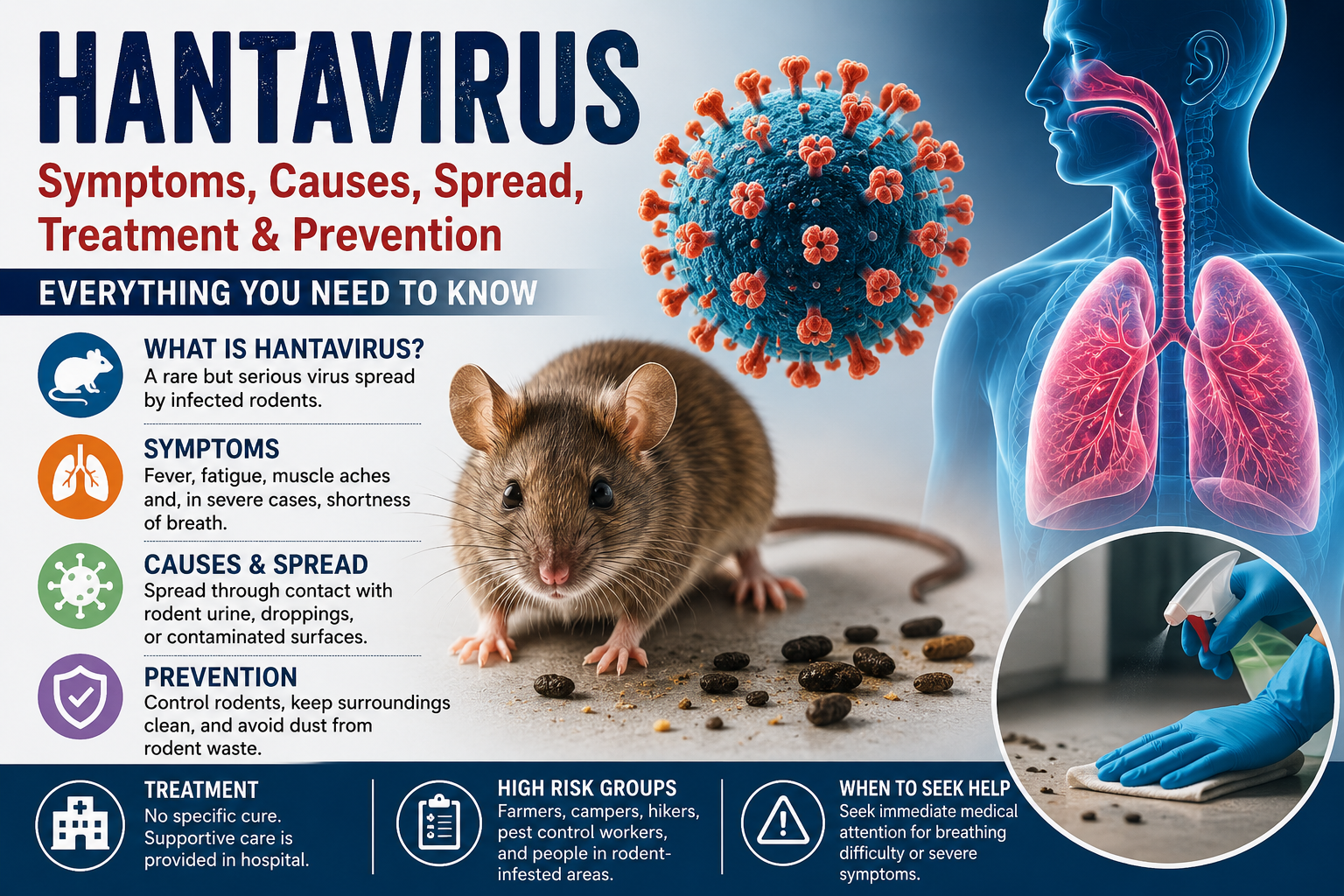
In recent years, outbreaks and news reports about hantavirus infections have triggered concern worldwide. Many people first heard about the virus after reports linked it to severe lung disease and sudden deaths in otherwise healthy individuals. While hantavirus infections are relatively rare, they can become life-threatening if not recognized early.
Unlike common viral infections such as influenza or COVID-19, hantavirus is primarily spread through contact with infected rodents and their waste products. The disease can progress rapidly, especially when it affects the lungs, making awareness and prevention extremely important.
This detailed guide explains hantavirus in simple yet medically accurate language, covering its causes, symptoms, transmission, diagnosis, treatment, prevention, and current global concerns.
What Is Hantavirus?
Hantavirus Pulmonary Syndrome is a serious infectious disease caused by a group of viruses belonging to the Hantaviridae family. These viruses are mainly carried by rodents such as rats and mice.
Humans usually become infected after inhaling tiny virus-containing particles from:
- Rodent urine
- Droppings
- Saliva
- Contaminated dust
Some hantaviruses affect the lungs, while others primarily damage the kidneys.
The two major forms of hantavirus disease are:
- Hantavirus Pulmonary Syndrome (HPS) – mainly seen in North and South America
- Hemorrhagic Fever with Renal Syndrome (HFRS) – more common in Europe and Asia
Among these, HPS is particularly dangerous because it can rapidly cause severe breathing difficulty and respiratory failure.
Why Is Hantavirus Suddenly in the News?
Recent media coverage has increased public interest in hantavirus because of:
- Reports of isolated deaths linked to rodent exposure
- Rising awareness of zoonotic diseases after COVID-19
- Increased human contact with rodents due to urbanization and climate changes
- Seasonal spikes in rodent populations in some regions
Although hantavirus outbreaks remain uncommon compared to many other infectious diseases, health experts continue monitoring the virus because of its high fatality rate in severe cases.
History of Hantavirus
The term “hantavirus” comes from the Hantan River region in South Korea, where scientists identified related viruses during the Korean War in the 1950s.
However, hantavirus gained major international attention in 1993 after an outbreak in the southwestern United States caused severe respiratory illness and unexplained deaths among young adults.
Researchers later discovered that deer mice were carrying the virus responsible for the outbreak.
Types of Hantavirus
Different hantaviruses exist around the world, each associated with specific rodent hosts.
Major Types Include:
1. Sin Nombre Virus
- Found mainly in North America
- Causes Hantavirus Pulmonary Syndrome
- Spread by deer mice
2. Andes Virus
- Found in South America
- Known for occasional human-to-human transmission
- Causes severe pulmonary disease
3. Hantaan Virus
- Common in Asia
- Causes Hemorrhagic Fever with Renal Syndrome
4. Seoul Virus
- Associated with rats
- Found globally, including urban areas
5. Puumala Virus
- Found in Europe
- Usually causes milder kidney disease
How Does Hantavirus Spread?
One of the most important things to understand is that hantavirus does not usually spread like the common cold or flu.
Main Modes of Transmission
Inhalation of Contaminated Air
This is the most common route.
When rodent urine or droppings dry out, the virus can become airborne in tiny dust particles. Breathing in these particles may lead to infection.
Direct Contact
Touching contaminated surfaces and then touching the nose, eyes, or mouth can spread the virus.
Rodent Bites
Though uncommon, bites from infected rodents can transmit hantavirus.
Contaminated Food
Food contaminated with rodent waste may carry infection risk.
Can Hantavirus Spread From Person to Person?
Most hantaviruses do not spread between humans.
However, the Andes virus in South America has shown limited human-to-human transmission in rare cases.
This makes hantavirus very different from viruses like:
- COVID-19
- Influenza
- Measles
Which Rodents Carry Hantavirus?
Different rodents carry different strains.
Common carriers include:
- Deer mice
- Cotton rats
- Rice rats
- White-footed mice
- Norway rats
Importantly, infected rodents often appear healthy and show no obvious signs of illness.
Who Is at Risk of Hantavirus Infection?
People with higher exposure to rodents face greater risk.
High-Risk Groups Include:
- Farmers
- Forest workers
- Campers and hikers
- Warehouse workers
- Pest control workers
- Construction workers
- People cleaning abandoned buildings
- Individuals living in rodent-infested homes
Rural areas usually have higher risk, but urban infections can also occur.
Symptoms of Hantavirus
Symptoms often begin 1 to 8 weeks after exposure.
The illness usually progresses through stages.
Early Symptoms of Hantavirus
Initial symptoms may resemble flu or viral fever.
Common Early Signs:
- Fever
- Chills
- Fatigue
- Muscle aches
- Headache
- Dizziness
- Nausea
- Vomiting
- Abdominal pain
Many patients initially mistake the illness for seasonal flu, dengue, or viral fever.
Advanced Symptoms of Hantavirus Pulmonary Syndrome
As the disease worsens, severe respiratory symptoms may develop rapidly.
Dangerous Symptoms Include:
- Shortness of breath
- Cough
- Chest tightness
- Rapid breathing
- Low oxygen levels
- Bluish lips or skin
- Fluid accumulation in lungs
At this stage, patients may require emergency hospitalization and ventilator support.
Symptoms of Hemorrhagic Fever with Renal Syndrome (HFRS)
HFRS mainly affects the kidneys.
Symptoms Include:
- High fever
- Low blood pressure
- Bleeding tendency
- Kidney injury
- Reduced urine output
- Facial redness
- Swelling
Severe cases may lead to kidney failure.
How Dangerous Is Hantavirus?
Hantavirus infections can become extremely serious.
Mortality Rate
- Hantavirus Pulmonary Syndrome has a fatality rate of approximately 30–40%
- Early diagnosis and intensive care improve survival
The rapid progression from mild symptoms to respiratory failure is what makes the disease particularly dangerous.
How Doctors Diagnose Hantavirus
Diagnosing hantavirus can be challenging because early symptoms mimic many other illnesses.
Doctors consider:
- Recent rodent exposure
- Travel history
- Occupational risk
- Respiratory symptoms
Diagnostic Tests
Blood Tests
Used to detect antibodies against hantavirus.
PCR Testing
Detects viral genetic material.
Chest Imaging
Chest X-rays or CT scans may reveal fluid buildup in the lungs.
Kidney Function Tests
Important in suspected HFRS cases.
Treatment of Hantavirus
Currently, there is no specific antiviral cure approved for most hantavirus infections.
Treatment mainly focuses on supportive medical care.
Supportive Treatment Includes
Oxygen Therapy
Helps maintain oxygen levels in patients with lung involvement.
Mechanical Ventilation
Severe respiratory failure may require ventilator support.
Intensive Care Unit (ICU) Care
Critically ill patients often need close monitoring.
Fluid Management
Doctors carefully balance fluids because excessive fluid can worsen lung damage.
Dialysis
Needed if severe kidney failure develops.
Is There Any Vaccine for Hantavirus?
At present, no widely available vaccine exists for hantavirus in most countries.
Some experimental vaccines have been studied, particularly in Asia, but global vaccine availability remains limited.
How to Prevent Hantavirus
Prevention is extremely important because treatment options are limited.
Best Ways to Prevent Hantavirus
1. Control Rodents Around Homes
- Seal holes and cracks
- Store food properly
- Use rodent traps
- Dispose of garbage correctly
2. Avoid Contact With Rodent Waste
Never directly touch rodent droppings or urine.
Safe Cleaning Method for Rodent-Contaminated Areas
One major mistake people make is sweeping or vacuuming dry rodent droppings, which can spread virus particles into the air.
Recommended Cleaning Steps
- Wear gloves and a mask
- Open windows for ventilation
- Spray disinfectant on droppings
- Wait at least 5 minutes
- Wipe using paper towels
- Dispose of waste safely
- Wash hands thoroughly
Camping and Outdoor Safety Tips
Campers and trekkers should:
- Avoid sleeping directly on the ground
- Store food securely
- Avoid rodent nests
- Use tents properly
- Keep campsites clean
Hantavirus and Climate Change
Scientists believe environmental changes may influence hantavirus outbreaks.
Possible Factors Include:
- Warmer temperatures
- Increased rainfall
- Food availability for rodents
- Expansion of rodent habitats
When rodent populations increase, human exposure risk may also rise.
Hantavirus vs COVID-19
Many people confuse hantavirus with COVID-19 because both can affect the lungs.
However, they are very different diseases.
| Feature | Hantavirus | COVID-19 |
|---|---|---|
| Cause | Rodent-borne virus | Coronavirus |
| Main Spread | Rodent exposure | Human-to-human |
| Commonness | Rare | Very common |
| Vaccine | Limited | Available |
| Early Symptoms | Flu-like | Flu-like |
| Severe Effect | Lung fluid buildup | Pneumonia, inflammation |
Hantavirus in India
India has reported limited evidence of hantavirus infections compared to some other countries.
However, rodent exposure remains common in many regions, especially:
- Rural areas
- Grain storage sites
- Farms
- Crowded urban environments
Because symptoms resemble other tropical diseases, some infections may go undiagnosed.
Awareness among healthcare professionals and the public is important for early detection.
Common Myths About Hantavirus
Myth 1: All Rats Carry Hantavirus
False. Only certain infected rodents carry the virus.
Myth 2: Hantavirus Spreads Easily Between Humans
False. Most strains do not spread person-to-person.
Myth 3: You Will Always Notice Rodent Exposure
False. Tiny contaminated dust particles may be invisible.
Myth 4: It Is Just Another Flu
False. Severe hantavirus infections can rapidly become life-threatening.
When Should You Seek Medical Help?
Immediate medical attention is important if you develop:
- Fever with breathing difficulty
- Sudden shortness of breath
- Severe weakness after rodent exposure
- Chest tightness
- Rapid worsening symptoms
Early ICU support significantly improves survival chances.
Public Health Importance of Hantavirus
Hantavirus highlights the growing importance of zoonotic diseases — infections transmitted from animals to humans.
Global health experts stress the need for:
- Better sanitation
- Rodent control
- Environmental monitoring
- Disease surveillance
- Public awareness campaigns
The rise of emerging infectious diseases worldwide shows how closely human health is connected to environmental and animal health.
Key Takeaways
- Hantavirus is a rare but potentially deadly rodent-borne viral disease.
- Humans usually become infected through inhalation of contaminated rodent waste particles.
- Early symptoms resemble flu but can rapidly progress to severe lung disease.
- There is no specific cure, making prevention extremely important.
- Proper rodent control and safe cleaning practices greatly reduce infection risk.
- Early hospitalization improves survival in severe cases.
Frequently Asked Questions (FAQs)
Is hantavirus common?
No, hantavirus infections are relatively rare but can be severe.
Can hantavirus spread through food?
Yes, contaminated food may pose a risk if exposed to infected rodent waste.
Is hantavirus curable?
There is no specific cure, but supportive medical treatment can improve survival.
Can pets spread hantavirus?
Dogs and cats are not known to spread hantavirus to humans, though they may bring infected rodents near homes.
How long does hantavirus survive in the environment?
The virus can survive for several days in favorable conditions, especially in cool and damp environments.
Is hantavirus airborne?
Yes, infection commonly occurs when contaminated dust particles become airborne and are inhaled.
Conclusion
Hantavirus may not be as widespread as many viral diseases, but its potential severity makes it an important public health concern. The virus reminds us that even ordinary environmental exposure — such as cleaning a dusty storage room or encountering rodents at campsites — can sometimes carry hidden health risks.
The good news is that awareness and prevention are highly effective. Proper sanitation, rodent control, and safe cleaning methods can dramatically reduce the risk of infection.
As global attention increasingly focuses on emerging infectious diseases, understanding illnesses like hantavirus helps individuals and communities stay informed, prepared, and protected.
For more regular updates you can visit our social media accounts,
Instagram: Follow us
Facebook: Follow us
WhatsApp: Join us
Telegram: Join us