
Zombie Drug Crisis: What Is It, Why People Appear “Zombie-Like,” and What You Need to Know
In recent months, viral videos and alarming headlines have brought global attention to a so-called “zombie drug” that appears to leave people in a trance-like state in broad daylight. Individuals are seen slumped over, moving slowly, or behaving in ways that resemble a loss of control over their bodies. While the imagery is shocking, the science behind it is even more concerning.
This article explores the truth behind the “zombie drug,” its causes, health risks, mechanism of action, and why it is becoming a growing public health issue. If you’re a healthcare professional, student, or concerned reader, this comprehensive guide will help you understand the phenomenon in depth.
What Is the “Zombie Drug”?
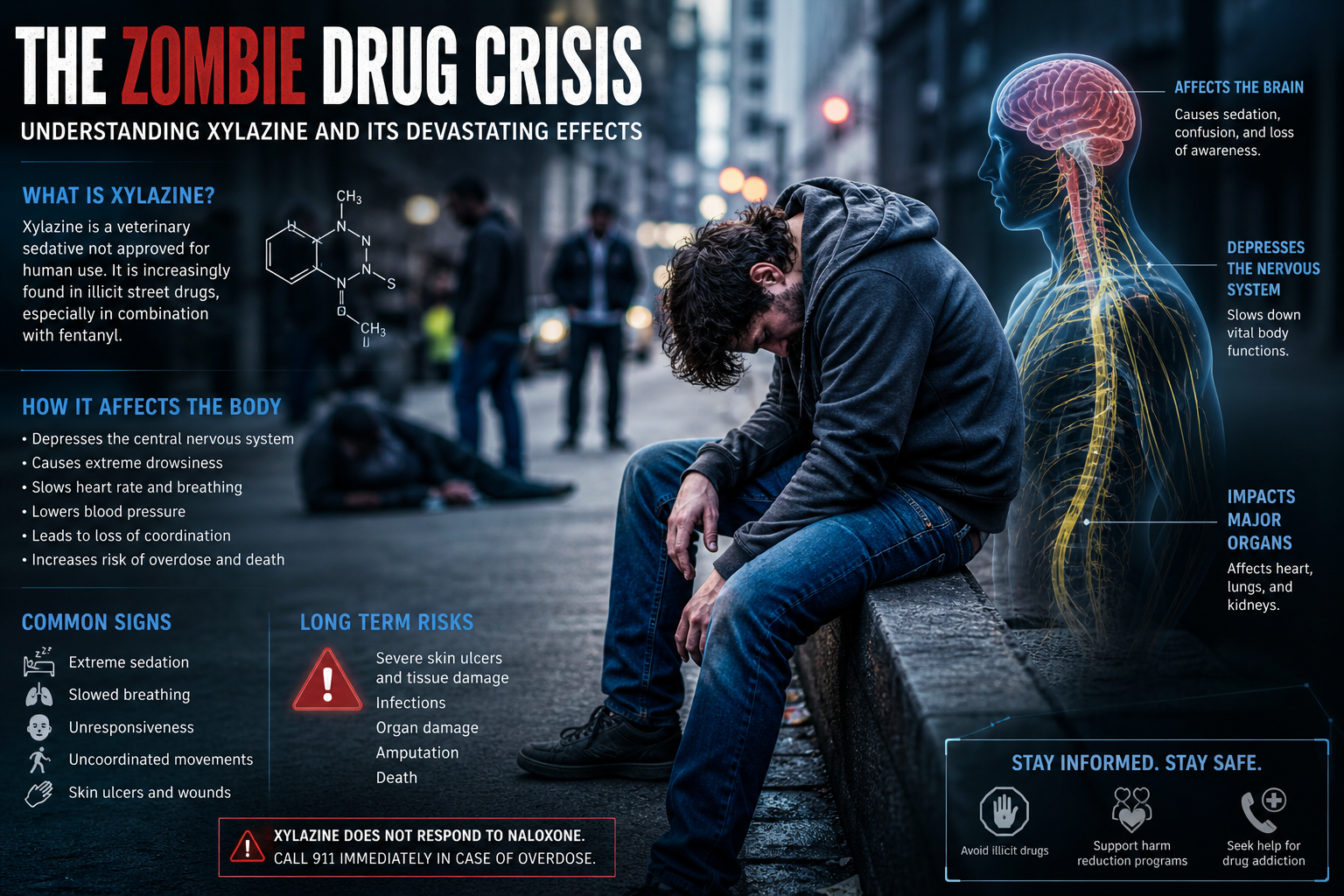
The term “zombie drug” is not a scientific or medical term. It is a media-driven label used to describe the effects of a drug called Xylazine, often found mixed with opioids like fentanyl.
Xylazine is originally a veterinary sedative and analgesic, used to calm large animals such as horses and cattle during medical procedures. It is not approved for human use.
However, illicit drug markets have started adding xylazine to opioid supplies, creating a dangerous combination that leads to the disturbing “zombie-like” effects seen in public.
Why Do People Look Like “Zombies”?
The “zombie-like” behavior is caused by a combination of central nervous system depression, muscle relaxation, and impaired consciousness.
Key effects include:
- Extreme sedation
- Slowed breathing
- Reduced muscle tone
- Confusion or disorientation
- Prolonged immobility
This leads to the characteristic posture often seen in videos:
- People standing but bent forward
- Minimal responsiveness to surroundings
- Slow or absent movement
Unlike fictional zombies, these individuals are experiencing severe drug intoxication, not a transformation.
How Xylazine Works in the Body
Xylazine acts as an alpha-2 adrenergic agonist, meaning it affects the nervous system by reducing the release of norepinephrine.
Mechanism of Action:
- Decreases sympathetic nervous system activity
- Causes sedation and muscle relaxation
- Slows heart rate and breathing
Effects on the body:
- Central nervous system depression
- Hypotension (low blood pressure)
- Bradycardia (slow heart rate)
- Respiratory depression
When combined with opioids like fentanyl, the effects become synergistically dangerous, significantly increasing the risk of overdose.
Why Is Xylazine Being Added to Street Drugs?
Drug manufacturers and dealers mix xylazine with opioids for several reasons:
1. Enhances Duration of Effect
Xylazine prolongs the sedative effects of opioids, making the “high” last longer.
2. Cost Reduction
It is cheaper than opioids, allowing dealers to dilute expensive drugs like fentanyl.
3. Increased Dependency
The combined effects can lead to faster addiction and dependence.
However, these short-term gains come with severe long-term consequences.
Health Risks of the Zombie Drug
The dangers associated with xylazine use are extensive and often life-threatening.
1. Severe Skin Ulcers and Tissue Damage
One of the most alarming effects is the development of:
- Large open wounds
- Skin necrosis (tissue death)
- Risk of infection and amputation
These ulcers can occur even at sites not injected, indicating systemic toxicity.
2. Respiratory Depression
Xylazine suppresses breathing. When combined with opioids, the risk of fatal respiratory failure increases dramatically.
3. Increased Overdose Risk
Unlike opioid overdoses, xylazine does not respond to standard reversal agents like naloxone alone.
This makes treatment more complicated and dangerous.
4. Cardiovascular Effects
- Low blood pressure
- Irregular heart rhythms
- Risk of cardiac arrest
5. Neurological Effects
- Confusion
- Memory impairment
- Loss of coordination
6. Withdrawal Symptoms
People dependent on xylazine may experience:
- Severe anxiety
- Agitation
- Rapid heart rate
- Insomnia
Why Naloxone Alone May Not Work
Naloxone is a life-saving drug used to reverse opioid overdoses. However, xylazine is not an opioid, so naloxone does not directly counter its effects.
Important note:
- Naloxone can still reverse the opioid component (like fentanyl)
- But sedation from xylazine may persist
This means emergency responders often face complex overdose cases requiring advanced care.
Global Spread and Public Health Concern
The “zombie drug” crisis has been widely reported in countries like the United States, but it is increasingly becoming a global issue.
Why it’s spreading:
- Expansion of synthetic drug markets
- Easy availability of veterinary drugs
- Lack of awareness among users
There are concerns that regions like India could also face similar risks if regulatory control is not strengthened.
Signs and Symptoms to Watch For
Recognizing early signs can help prevent fatal outcomes.
Physical signs:
- Unusual drowsiness
- Slow breathing
- Slurred speech
- Unresponsiveness
Behavioral signs:
- Standing or sitting in unnatural positions
- Lack of awareness of surroundings
- Delayed reactions
Skin-related symptoms:
- Open wounds
- Blackened or infected tissue
Diagnosis and Medical Management
Diagnosis:
There is no rapid bedside test for xylazine. Diagnosis is usually based on:
- Clinical symptoms
- History of drug use
- Toxicology screening (if available)
Treatment Approach:
1. Airway and Breathing Support
- Oxygen therapy
- Mechanical ventilation if needed
2. Naloxone Administration
- Used to reverse opioid effects
- May require repeated dosing
3. Cardiovascular Monitoring
- Blood pressure stabilization
- Heart rate monitoring
4. Wound Care
- Cleaning and dressing ulcers
- Antibiotics for infections
- Surgical intervention in severe cases
Prevention Strategies
For Individuals:
- Avoid illicit drug use
- Seek help for substance dependence
- Be aware of contaminated drug supplies
For Healthcare Systems:
- Increase awareness among professionals
- Improve surveillance of drug trends
- Provide harm reduction services
For Government and Policy Makers:
- Regulate veterinary drug distribution
- Strengthen drug monitoring systems
- Promote addiction treatment programs
Role of Pharmacists and Healthcare Professionals
As someone involved in pharmaceutical or healthcare fields, your role is crucial.
Key responsibilities:
- Educate patients and communities
- Identify early signs of drug abuse
- Promote safe medication practices
- Support rehabilitation efforts
Pharmacists can play a frontline role in harm reduction and awareness campaigns.
Myths vs Reality
| Myth | Reality |
|---|---|
| It turns people into zombies | It causes severe sedation and loss of control |
| It’s a new drug | Xylazine has existed for years in veterinary medicine |
| Naloxone completely reverses it | Only reverses opioid part, not xylazine |
| Only affects certain countries | Potential to spread globally |
Future Outlook
The rise of the “zombie drug” highlights a troubling trend in drug abuse:
- Increasing use of synthetic combinations
- Growing unpredictability in drug effects
- Higher risk of fatal outcomes
Without timely intervention, this could escalate into a major global health crisis.
Conclusion
The so-called “zombie drug” is not a mystery—it is a dangerous combination of substances, primarily involving Xylazine mixed with opioids like fentanyl. The shocking visuals seen in viral videos are a manifestation of severe central nervous system depression, not a fictional transformation.
Understanding the science behind this phenomenon is essential for combating misinformation and addressing the real issue: a growing substance abuse crisis with serious health consequences.
Awareness, education, and proactive healthcare measures are key to preventing further harm. Whether you are a healthcare professional or a concerned citizen, staying informed can make a critical difference.
FAQs
1. What is the zombie drug called?
The “zombie drug” commonly refers to xylazine, often mixed with opioids.
2. Why do people bend over like zombies?
Due to extreme sedation, muscle relaxation, and loss of coordination.
3. Can naloxone reverse the zombie drug?
It reverses opioid effects but not xylazine itself.
4. Is the zombie drug present in India?
Currently limited reports, but potential risk exists due to global drug trafficking.
5. What are the most dangerous effects?
Respiratory depression, skin ulcers, and increased overdose risk.