


Autism Spectrum Disorder (ASD): Symptoms, Causes, Diagnosis, Treatment & Early Intervention
Introduction
Autism Spectrum Disorder (ASD) is a complex neurodevelopmental condition that affects communication, behavior, and social interaction. The term “spectrum” reflects the wide range of symptoms and severity seen in individuals with autism.
Over the past decade, awareness about autism has increased significantly, leading to earlier diagnosis and improved support systems. However, many parents and caregivers still struggle to recognize early signs and understand available treatment options.
This article provides a comprehensive, SEO-friendly guide to autism, covering its causes, symptoms, diagnosis, treatment, and management strategies.
What is Autism Spectrum Disorder (ASD)?
Autism Spectrum Disorder is a developmental condition that typically appears in early childhood, usually before the age of 3 years.
It affects how a person:
- Communicates with others
- Interacts socially
- Behaves and learns
ASD includes a range of conditions that were previously classified separately, such as:
- Autistic disorder
- Asperger’s syndrome
- Pervasive developmental disorder (PDD-NOS)
Epidemiology of Autism
- Autism affects approximately 1 in 100 children globally
- More common in boys than girls (about 4:1 ratio)
- Increasing prevalence due to better awareness and diagnostic methods
Causes of Autism
The exact cause of autism is not fully understood, but research suggests a combination of genetic and environmental factors.
1. Genetic Factors
- Strong hereditary component
- Mutations in genes affecting brain development
- Family history increases risk
2. Environmental Factors
- Advanced parental age
- Prenatal exposure to toxins
- Maternal infections during pregnancy
- Complications during birth
3. Neurological Factors
- Differences in brain structure and function
- Abnormal neural connectivity
Here’s an in-depth, SEO-optimized expansion of the “Early Signs and Symptoms of Autism” section you can directly plug into your blog:
Early Signs and Symptoms of Autism Spectrum Disorder (ASD)
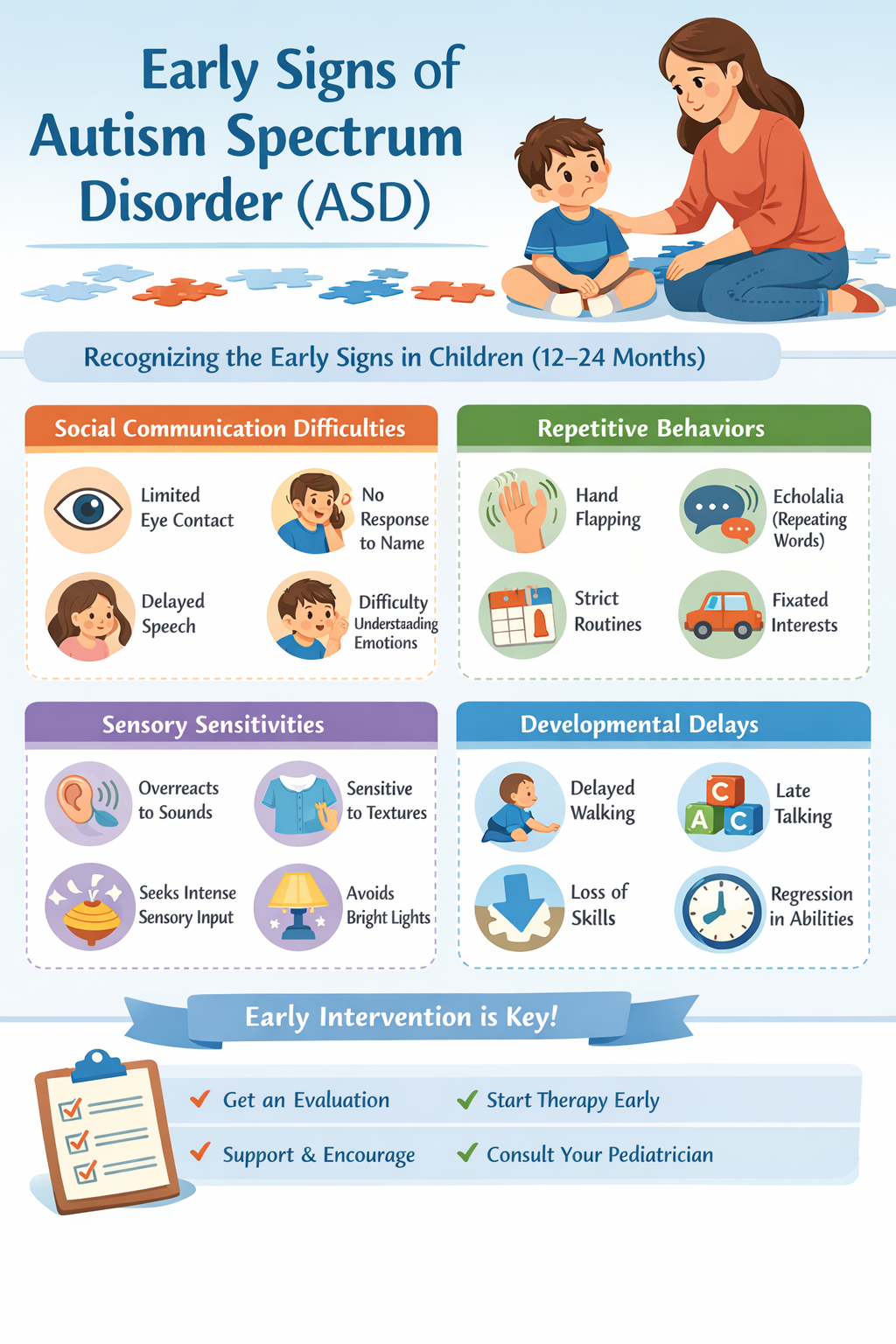
Recognizing the early signs of autism is crucial for timely diagnosis and intervention. Symptoms usually appear in the first 12–24 months of life, though some may be noticeable even earlier.
Early signs can vary widely, but they generally fall into three major domains:
- Social communication difficulties
- Repetitive and restrictive behaviors
- Sensory processing abnormalities
1. Social Communication Difficulties
One of the most defining features of autism is difficulty in social interaction and communication.
A. Limited Eye Contact
- Infants may avoid or have minimal eye contact with caregivers
- Reduced “social gaze” during feeding or play
- Lack of shared attention (not looking where others point)
👉 Example: A child may not look at a parent when their name is called.
B. Lack of Response to Name
- Typically noticeable by 9–12 months
- Child may seem to “ignore” when called, even with normal hearing
👉 This is often one of the earliest red flags parents notice.
C. Delayed or Absent Speech Development
- No babbling by 12 months
- No meaningful single words by 16 months
- No two-word phrases by 24 months
Some children may:
- Lose previously acquired speech (regression)
- Use very limited vocabulary
D. Difficulty Understanding Emotions
- Struggles to interpret facial expressions
- May not respond to others’ happiness, sadness, or distress
- Limited empathy or emotional reciprocity
E. Lack of Gestures and Non-Verbal Communication
- Rarely points, waves, or nods
- Does not use gestures to communicate needs
- Difficulty understanding body language
F. Reduced Interest in Social Interaction
- Prefers to play alone
- Does not initiate or respond to social play
- Limited interest in peers
2. Repetitive and Restrictive Behaviors
Children with autism often display repetitive patterns of behavior, activities, or interests.
A. Repetitive Body Movements (Stimming)
- Hand-flapping
- Rocking back and forth
- Spinning in circles
- Finger flicking
These behaviors may increase during:
- Excitement
- Stress
- Overstimulation
B. Echolalia (Repetition of Words or Phrases)
- Immediate echolalia: repeating words right after hearing them
- Delayed echolalia: repeating phrases heard earlier (e.g., from TV)
👉 Example: A child repeats a cartoon dialogue instead of answering a question.
C. Strict Adherence to Routines
- Strong resistance to change
- Distress with minor changes in schedule or environment
- Insistence on doing things in a specific way
👉 Example: Taking the same route daily and becoming upset if altered.
D. Highly Focused Interests
- Intense interest in specific topics or objects
- May focus excessively on parts of objects (e.g., wheels of a toy car)
- Limited variety in play activities
E. Repetitive Play Patterns
- Lining up toys instead of playing functionally
- Repeating the same activity over and over
- Lack of imaginative or pretend play
3. Sensory Processing Abnormalities
Many children with autism experience unusual responses to sensory stimuli.
A. Hypersensitivity (Over-Responsiveness)
- Covers ears to normal sounds
- Avoids bright lights
- Dislikes certain textures (clothes, food)
- Distressed by loud noises
B. Hyposensitivity (Under-Responsiveness)
- Reduced sensitivity to pain or temperature
- Seeks intense sensory input (spinning, jumping)
- Fascination with lights or moving objects
C. Unusual Sensory Interests
- Smelling or touching objects excessively
- Watching spinning objects repeatedly
- Interest in patterns, reflections, or shadows
4. Developmental Delays and Regression
A. Delayed Milestones
- Late sitting, crawling, or walking
- Delayed language and cognitive skills
B. Developmental Regression
- Loss of previously acquired skills
- May occur between 15–30 months
- Loss of speech, eye contact, or social engagement
👉 This is a critical warning sign and requires immediate medical evaluation.
5. Behavioral and Emotional Signs
A. Unusual Emotional Responses
- Excessive irritability
- Sudden emotional outbursts (meltdowns)
- Difficulty self-soothing
B. Difficulty with Transitions
- Trouble shifting from one activity to another
- May result in tantrums or anxiety
C. Attention Differences
- Very short attention span OR
- Hyperfocus on specific activities
6. Red Flag Checklist (By Age)
By 6 Months
- No social smile
- Limited eye contact
By 9 Months
- No back-and-forth sounds or expressions
By 12 Months
- No babbling
- No gestures (pointing, waving)
- No response to name
By 16 Months
- No spoken words
By 24 Months
- No meaningful two-word phrases
When Should Parents Be Concerned?
Parents should consult a healthcare professional if they notice:
- Loss of speech or social skills
- Lack of eye contact
- Repetitive behaviors
- Delayed communication
Early detection leads to better outcomes through timely intervention.
Why Early Recognition is Important
Identifying symptoms early allows for:
- Early behavioral therapy
- Improved language development
- Better social skills
- Reduced long-term challenges
Key Takeaway
Early signs of Autism Spectrum Disorder can be subtle but are often noticeable in the first two years of life. Parents and caregivers play a vital role in early detection.
The sooner intervention begins, the better the chances of improving a child’s developmental trajectory and quality of life.
Types / Levels of Autism
According to DSM-5, autism is classified into three levels based on support needs:
| Level | Description |
|---|---|
| Level 1 | Requires support |
| Level 2 | Requires substantial support |
| Level 3 | Requires very substantial support |
Diagnosis of Autism
There is no single test for autism. Diagnosis involves a combination of evaluations.
1. Developmental Screening
- Conducted during routine pediatric visits
- Identifies early developmental delays
2. Comprehensive Diagnostic Evaluation
- Behavioral assessment
- Speech and language evaluation
- Cognitive testing
3. Diagnostic Criteria
Based on DSM-5:
- Persistent deficits in social communication
- Restricted and repetitive behaviors
Treatment and Management of Autism
There is no cure for autism, but early and appropriate interventions can significantly improve quality of life.
1. Behavioral Therapy
- Applied Behavior Analysis (ABA)
- Helps improve social, communication, and learning skills
2. Speech Therapy
- Improves communication abilities
- Helps with language development
3. Occupational Therapy
- Enhances daily living skills
- Improves motor coordination
4. Medications
Used to manage associated symptoms:
- Irritability
- Anxiety
- Hyperactivity
Commonly prescribed:
- Antipsychotics
- Antidepressants
- Stimulants
Early Intervention: Why It Matters
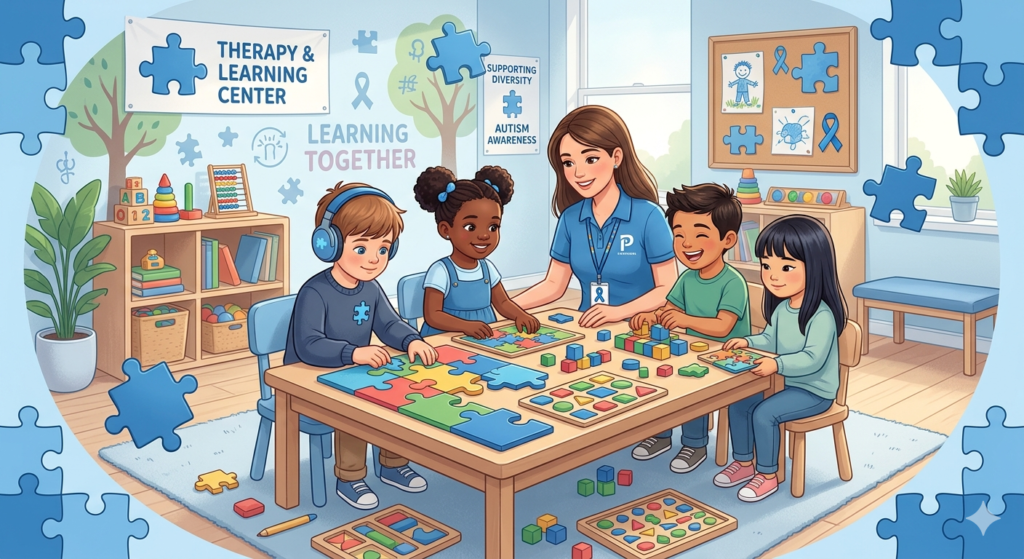
Early intervention (before age 3) can:
- Improve communication skills
- Enhance social interactions
- Reduce severity of symptoms
- Promote independence
Living with Autism
Autism is a lifelong condition, but many individuals lead fulfilling and productive lives with proper support.
Support Strategies
- Structured routines
- Visual aids
- Social skills training
- Family counseling
Role of Parents and Caregivers
- Early recognition
- Consistent therapy
- Emotional support
Autism in Adults
Autism is not limited to children. Adults may experience:
- Difficulty in relationships
- Challenges in employment
- Anxiety or depression
However, many adults with autism excel in:
- Technology
- Arts
- Analytical fields
Prevention of Autism
There is no guaranteed way to prevent autism, but some steps may reduce risk:
- Proper prenatal care
- Avoid harmful substances during pregnancy
- Manage maternal health conditions
Myths vs Facts About Autism
| Myth | Fact |
|---|---|
| Vaccines cause autism | No scientific evidence supports this |
| Autism is a disease | It is a neurodevelopmental condition |
| People with autism lack intelligence | Intelligence varies widely |
| Autism can be cured | It can be managed, not cured |
When to See a Doctor
Consult a healthcare professional if a child:
- Does not respond to name by 12 months
- Has delayed speech
- Shows repetitive behaviors
- Avoids eye contact
Conclusion
Autism Spectrum Disorder is a complex but manageable condition. With early diagnosis, appropriate therapy, and strong support systems, individuals with autism can lead meaningful and independent lives.
Raising awareness, promoting acceptance, and ensuring access to early intervention are key to improving outcomes for people with autism.
Frequently Asked Questions
1. What are the early signs of autism?
Early signs include delayed speech, lack of eye contact, and repetitive behaviors.
2. Can autism be cured?
No, autism cannot be cured, but early intervention can greatly improve symptoms.
3. What causes autism?
Autism is caused by a combination of genetic and environmental factors.
4. At what age is autism diagnosed?
Autism can be diagnosed as early as 18–24 months.
5. Is autism lifelong?
Yes, autism is a lifelong condition, but symptoms can be managed effectively.
For more regular updates you can visit our social media accounts,
Instagram: Follow us
Facebook: Follow us
WhatsApp: Join us
Telegram: Join us