


Introduction
Heat stroke is a serious and potentially life-threatening medical emergency that occurs when the body is unable to regulate its temperature in extremely hot conditions. Normally, the human body maintains a temperature around 37°C (98.6°F) through sweating and circulation adjustments. However, prolonged exposure to high temperatures, dehydration, or strenuous activity in hot environments can overwhelm the body’s cooling system, leading to heat stroke.
Unlike mild heat-related illnesses such as heat cramps or heat exhaustion, heat stroke is severe and requires immediate medical attention. If untreated, it can lead to damage to the brain, heart, kidneys, and muscles.
In this detailed article, we will explore the causes, symptoms, risk factors, treatment, and prevention of heat stroke, along with practical tips to stay safe during extreme heat.
What is Heat Stroke?
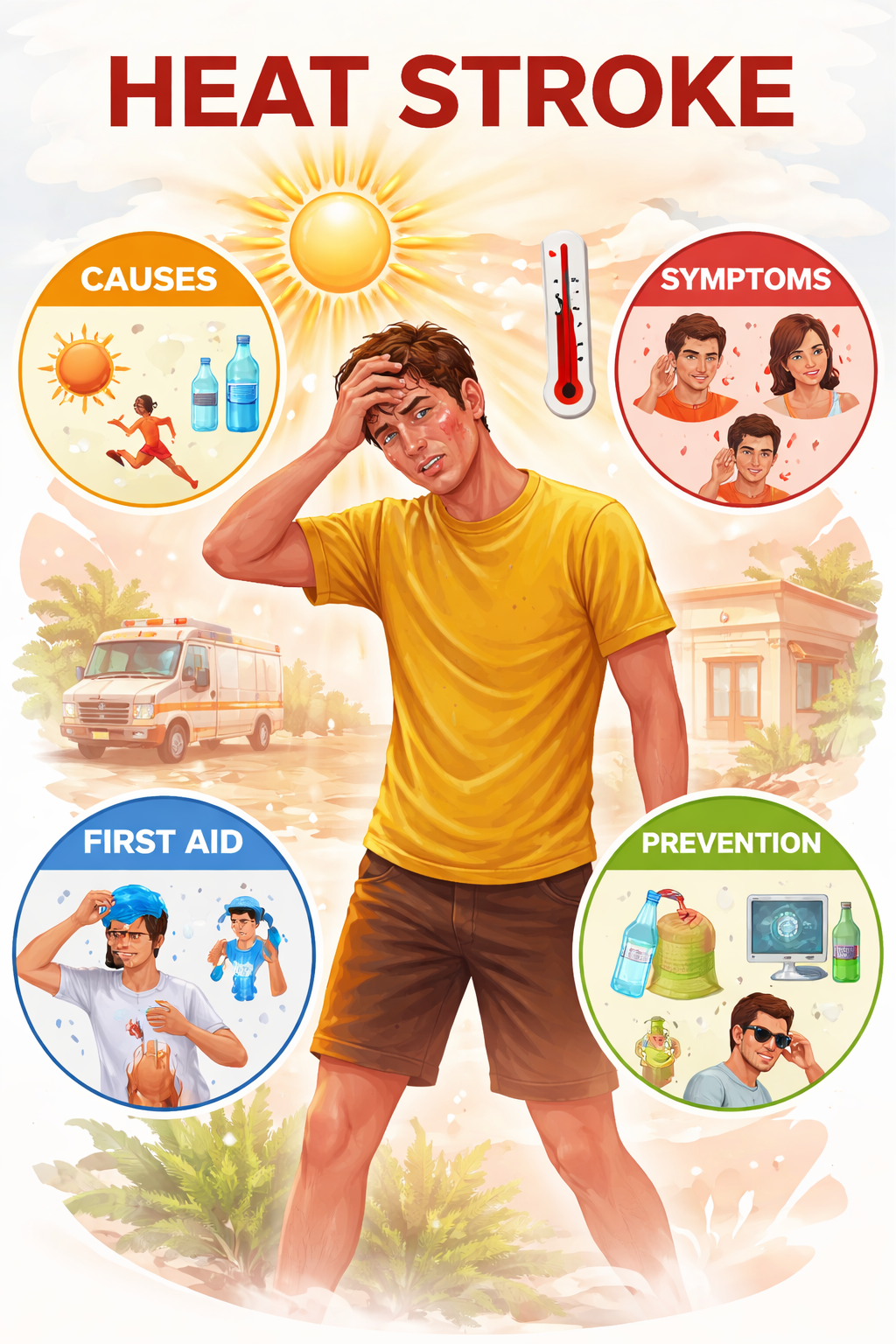
Heat Stroke is the most severe form of heat-related illness. It occurs when the body temperature rises above 40°C (104°F) due to prolonged exposure to high environmental temperatures or intense physical activity.
During heat stroke:
- The body loses its ability to regulate temperature.
- Sweating may stop, causing body temperature to rise rapidly.
- Vital organs begin to malfunction.
Heat stroke can develop within 10–15 minutes in extreme conditions and can be fatal if not treated quickly.
Types of Heat Stroke
Heat stroke is broadly classified into two main types.
1. Classic Heat Stroke
This type usually affects vulnerable populations such as:
- Elderly individuals
- Infants and young children
- People with chronic illnesses
It commonly occurs during heat waves when people are exposed to high temperatures for prolonged periods without adequate cooling.
2. Exertional Heat Stroke
This occurs when the body generates excessive heat during intense physical activity.
Common in:
- Athletes
- Military personnel
- Outdoor workers
- Construction workers
In this condition, heat builds up faster than the body can dissipate it.
Causes of Heat Stroke
Heat stroke occurs when the body’s temperature regulation system fails. Several factors contribute to this condition.
1. Prolonged Exposure to High Temperatures
Staying in hot environments without adequate hydration or cooling can lead to heat stroke.
2. Strenuous Physical Activity
Heavy exercise in hot weather increases body heat production.
3. Dehydration
When the body lacks sufficient fluids, sweating decreases and cooling becomes ineffective.
4. Wearing Heavy Clothing
Tight or thick clothing prevents sweat from evaporating and traps heat.
5. Poor Ventilation
Closed environments without air circulation increase heat accumulation.
6. Alcohol Consumption
Alcohol interferes with the body’s ability to regulate temperature and increases dehydration.
Risk Factors for Heat Stroke
Some individuals are more susceptible to heat stroke.
Age
- Infants and children have underdeveloped temperature regulation.
- Older adults have reduced ability to adapt to heat.
Chronic Diseases
People suffering from the following conditions are at higher risk:
- Diabetes Mellitus
- Cardiovascular Disease
- Obesity
- Kidney Disease
Medications
Some drugs interfere with sweating or fluid balance such as:
- Diuretics
- Antihistamines
- Beta Blockers
- Antidepressants
Environmental Factors
- High humidity
- Heat waves
- Urban heat islands
- Poor ventilation
Signs and Symptoms of Heat Stroke
Heat stroke symptoms often appear suddenly and progress rapidly.
Major Symptoms
- Body temperature above 40°C (104°F)
- Hot, dry skin (sometimes sweating in exertional cases)
- Severe headache
- Dizziness
- Confusion or altered mental state
- Rapid heartbeat
- Rapid breathing
- Nausea and vomiting
- Muscle weakness
Severe Symptoms
If untreated, heat stroke may cause:
- Seizures
- Loss of consciousness
- Organ failure
- Coma
Complications of Heat Stroke
Heat stroke can damage multiple organs due to prolonged high temperature.
Brain Damage
High temperatures can cause swelling of the brain, leading to neurological complications.
Kidney Failure
Severe dehydration and muscle breakdown may cause acute kidney injury.
Muscle Breakdown
A condition called rhabdomyolysis may occur, where muscle tissue breaks down and releases toxins into the bloodstream.
Cardiovascular Problems
The heart may struggle to maintain circulation due to extreme stress.
Liver Damage
Heat stress may impair liver function.
Without prompt treatment, these complications may lead to death.
Diagnosis of Heat Stroke
Diagnosis is usually based on:
- Clinical symptoms
- Body temperature measurement
- History of heat exposure
Doctors may also perform laboratory tests to evaluate organ damage:
- Blood tests
- Electrolyte levels
- Kidney function tests
- Urine tests
First Aid for Heat Stroke
Heat stroke is a medical emergency and requires immediate action.
Step-by-Step First Aid
- Call emergency medical services immediately.
- Move the person to a cool or shaded place.
- Remove excess clothing.
- Cool the body quickly by:
- Applying cold water
- Using ice packs on neck, armpits, and groin
- Fan the person to increase evaporation.
- Offer cool fluids if the person is conscious.
Do not give alcohol or caffeinated beverages.
Rapid cooling is essential to prevent organ damage.
Medical Treatment of Heat Stroke
In hospital settings, treatment focuses on rapidly reducing body temperature and stabilizing organ function.
Cooling Techniques
Doctors may use:
- Ice water immersion
- Cooling blankets
- Evaporative cooling techniques
- Intravenous fluids
Supportive Care
- Oxygen therapy
- Electrolyte correction
- Monitoring kidney and heart function
Severe cases may require intensive care monitoring.
Prevention of Heat Stroke
Heat stroke can often be prevented with proper precautions.
Stay Hydrated
Drink plenty of fluids such as:
- Water
- Oral rehydration solutions
- Coconut water
Avoid alcohol and excessive caffeine.
Avoid Peak Heat Hours
Try to stay indoors between 11 AM and 4 PM, when temperatures are highest.
Wear Appropriate Clothing
- Lightweight
- Loose-fitting
- Light-colored clothing
Use Cooling Methods
- Fans
- Air conditioners
- Cool showers
Take Frequent Breaks
If working outdoors, take regular breaks in shaded or cool areas.
Special Precautions for Children and Elderly
For Children
- Never leave children inside parked vehicles.
- Ensure adequate hydration during outdoor play.
- Provide shaded areas.
For Elderly Individuals
- Stay in air-conditioned environments.
- Drink fluids regularly even if not thirsty.
- Monitor medications that may affect hydration.
Foods That Help Prevent Heat Stroke
Certain foods help maintain hydration and electrolyte balance.
Examples include:
- Watermelon
- Cucumber
- Coconut water
- Buttermilk
- Oranges
- Lemon water
These foods help maintain body temperature and prevent dehydration.
Heat Stroke vs Heat Exhaustion
Many people confuse heat stroke with heat exhaustion, but they differ in severity.
| Feature | Heat Exhaustion | Heat Stroke |
|---|---|---|
| Body Temperature | Below 40°C | Above 40°C |
| Sweating | Heavy sweating | Often dry skin |
| Consciousness | Usually alert | Confusion or unconsciousness |
| Severity | Moderate | Medical emergency |
Heat exhaustion can progress into heat stroke if not treated.
When to Seek Medical Help
Immediate medical attention is required if a person experiences:
- Body temperature above 40°C
- Confusion or agitation
- Loss of consciousness
- Seizures
- Difficulty breathing
Early treatment significantly improves survival chances.
Conclusion
Heat stroke is a life-threatening medical emergency caused by the body’s inability to regulate temperature during extreme heat exposure. It can lead to severe complications such as brain damage, kidney failure, and even death if not treated promptly.
However, most cases are preventable through simple measures such as staying hydrated, avoiding extreme heat, wearing appropriate clothing, and recognizing early symptoms.
With climate change and increasing global temperatures, awareness about heat stroke is more important than ever. By understanding its symptoms, causes, and prevention strategies, individuals can protect themselves and others from this dangerous condition.
For more regular updates you can visit our social media accounts,
Instagram: Follow us
Facebook: Follow us
WhatsApp: Join us
Telegram: Join us