


Mounjaro Injection (Tirzepatide): Uses, Dosage, Benefits, Side Effects & more
Introduction
Diabetes and obesity are two of the fastest-growing health challenges in the world today. With modern lifestyles, sedentary habits, and unhealthy eating patterns, millions of people are affected by uncontrolled blood sugar and weight-related disorders. To address these rising concerns, science has been continuously evolving therapies that are more effective, safer, and easier to use. One such modern innovation is Mounjaro (Tirzepatide) — a once-weekly injectable medication that has transformed diabetes and weight management.
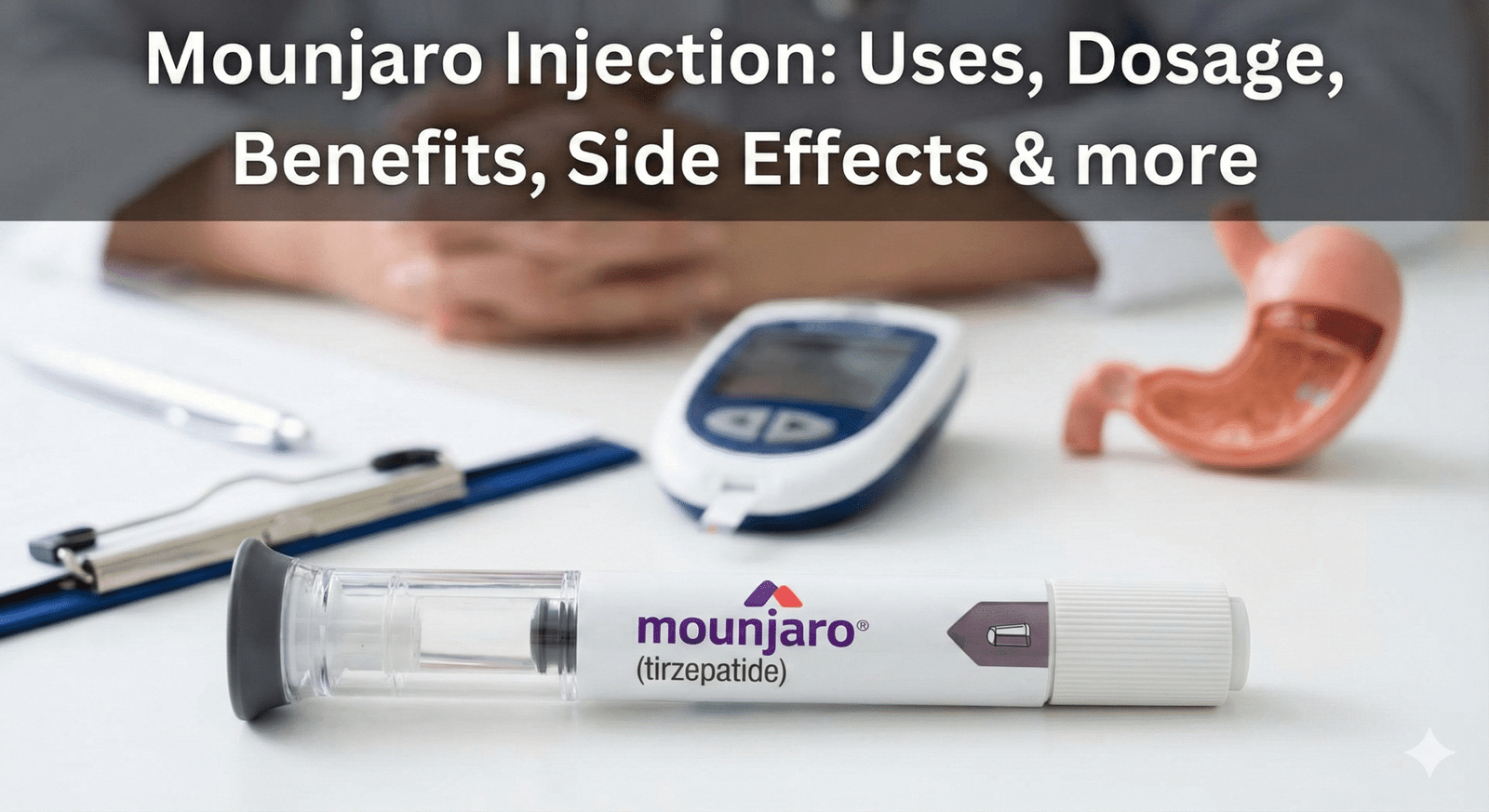
Known for its dual action on two key metabolic hormones, Mounjaro is making headlines for delivering exceptional results in controlling blood glucose and promoting substantial weight loss. This article provides an in-depth understanding of the drug, its mechanism of action, dosage pattern, manufacturer details, safety profile, and everything you need to know before considering it as a treatment option.
What is Mounjaro (Tirzepatide)?
Mounjaro is a prescription injectable medication containing tirzepatide, developed by Eli Lilly and Company, one of the world’s leading pharmaceutical manufacturers.
It was initially approved for Type 2 diabetes management, but its significant impact on weight reduction has expanded its use globally. In some countries, tirzepatide is also approved for obesity under the brand name Zepbound.
What makes Mounjaro unique is that it is the first and only drug that activates both GLP-1 and GIP receptors, two natural hormones involved in regulating blood sugar and body weight. This dual mechanism places Mounjaro in a different category from traditional GLP-1 drugs like semaglutide.
How Does Mounjaro Work? (Mechanism of Action)
Unlike traditional diabetic medications that target a single pathway, Mounjaro works on two incretin hormones simultaneously:
1. GLP-1 Action (Glucagon-Like Peptide-1)
GLP-1 is a hormone released after meals that helps regulate blood sugar.
Mounjaro mimics this hormone and provides multiple benefits:
- Stimulates insulin release only when blood sugar is high
- Suppresses glucagon release, reducing unnecessary glucose production
- Slows down gastric emptying, helping food digest gradually
- Helps control appetite and reduces cravings
This directly helps in lower post-meal sugar spikes and better satiety.
2. GIP Action (Glucose-Dependent Insulinotropic Polypeptide)
GIP is another hormone that supports insulin secretion. However, its metabolic effects go beyond glucose control:
- Improves the body’s sensitivity to insulin
- Enhances fat metabolism
- Supports long-term weight reduction
- Works synergistically with GLP-1 to boost metabolic efficiency
What Makes Dual Action Special?
When both pathways are activated together, clinical studies show:
- Greater HbA1c reduction
- Higher percentage of weight loss
- Better insulin sensitivity
- More stable blood sugar levels
This dual-incretin model is what gives Mounjaro its extraordinary effectiveness.
Uses of Mounjaro
1. Type 2 Diabetes Mellitus
Mounjaro is primarily approved for improving glycemic control in adults with Type 2 diabetes. It has shown the ability to:
- Reduce HbA1c by up to 1.5%–2.5% depending on the dose
- Help patients reach target blood sugar levels without severe hypoglycemia
- Reduce fasting as well as post-meal glucose levels
- Support patients who are not responding well to metformin, sulfonylureas, DPP-4 inhibitors, or basal insulin
Because of its strong appetite-suppressing effects, many diabetic patients also experience improved energy levels, reduced cravings, and fat loss.
2. Weight Management and Obesity
One of the biggest advantages of Mounjaro is its ability to promote substantial weight loss.
In clinical trials:
- Some patients lost 15–22% of their body weight
- It showed greater weight reduction compared to semaglutide (Ozempic/Wegovy)
- It improved waist circumference, BMI, visceral fat, and metabolic parameters
In several countries, tirzepatide is specifically approved for obesity under the brand Zepbound, while in others, Mounjaro is commonly prescribed off-label for weight loss.
People struggling with PCOS, metabolic syndrome, insulin resistance, fatty liver, or severe obesity are frequently found to benefit from tirzepatide therapy.
Dosage and Administration
Mounjaro comes in pre-filled injection pens designed for simple, pain-free, once-weekly use.
It can be self-administered or given by a caregiver.
Starting Dose
- 2.5 mg once weekly
This starting dose is not intended for glycemic control but helps the body adjust to the medication and minimizes digestive side effects.
Dose Escalation
After 4 weeks:
- Increase to 5 mg once weekly
If needed for additional blood sugar or weight-loss benefits, the doctor may increase the dose in steps:
- 7.5 mg
- 10 mg
- 12.5 mg
- Maximum: 15 mg once weekly
The dose escalation typically happens every 4 weeks, depending on tolerance.
How to Inject?
- Inject subcutaneously in the abdomen, thigh, or upper arm
- Rotate injection sites weekly
- Can be taken with or without food
- Should be taken on the same day each week, but timing is flexible
Missed Dose Instructions
- If less than 96 hours (4 days) have passed → take it as soon as possible
- If more than 4 days have passed → skip the missed dose and wait for the next scheduled dose
Manufacturer Details
Mounjaro is manufactured by:
- Eli Lilly and Company, USA
A trusted global leader in diabetes care, known for producing insulin, Trulicity (dulaglutide), and other pharmaceutical innovations.
Tirzepatide under the name Zepbound is also produced by Eli Lilly for obesity management.
Benefits of Mounjaro (Clinical Advantages)
1. Strong Blood Sugar Reduction
Mounjaro significantly improves glycemic control and lowers HbA1c levels, even in patients who are resistant to other medications.
2. Significant Weight Loss
Its appetite-suppressing and fat-metabolism-enhancing effects make it one of the most powerful weight-loss medications currently available.
3. Improved Cardiometabolic Health
Patients often see improvements in:
- Blood pressure
- Lipid levels
- Liver fats (helpful in fatty liver disease)
- Insulin sensitivity
4. Convenient Once-Weekly Dosing
The weekly injection helps improve compliance compared to daily medications.
5. Low Risk of Hypoglycemia
Since tirzepatide works in a glucose-dependent manner, the risk of low blood sugar is minimal unless combined with insulin or sulfonylureas.
Side Effects of Mounjaro
Common Side Effects
These usually appear at the start or during dose escalation:
- Nausea
- Vomiting
- Diarrhea
- Constipation
- Reduced appetite
- Stomach discomfort
- Bloating or gas
These effects generally reduce as the body adjusts.
Serious Side Effects (Rare)
- Acute pancreatitis
- Gallbladder issues (gallstones, cholecystitis)
- Kidney problems due to dehydration
- Severe gastrointestinal disturbances
- Thyroid C-cell tumors (observed in rodents, not confirmed in humans)
Seek immediate medical help if symptoms like severe abdominal pain, persistent vomiting, or signs of pancreatitis appear.
Precautions & Contraindications
Avoid in:
- Type 1 diabetes
- Pregnancy or breastfeeding (unless physician recommends)
- Patients with pancreatitis history
- Severe gastrointestinal diseases
- Personal or family history of medullary thyroid carcinoma
- MEN2 (Multiple Endocrine Neoplasia type 2)
Caution in:
- Kidney impairment
- Gallbladder disorders
- Patients on insulin therapy
- Patients who consume excess alcohol
Mounjaro vs. Other Weight Loss/Diabetes Drugs
Mounjaro vs Semaglutide (Ozempic/Wegovy)
- Mounjaro generally offers greater weight loss
- Provides stronger HbA1c reduction
- Has dual action (GIP + GLP-1) vs GLP-1 only
- Weekly dosing for both
Mounjaro vs Liraglutide (Victoza/Saxenda)
- Liraglutide requires daily injection
- Mounjaro provides more weight loss and better tolerability
- Better convenience with once-weekly dosing
Storage Instructions
- Refrigerate between 2°C and 8°C
- Can be kept at room temperature (up to 25°C) for 21 days
- Do not freeze
- Keep away from direct sunlight and heat
Frequently Asked Questions (FAQ)
1. How soon does Mounjaro start working?
Blood sugar improvements can begin within 1–2 weeks, while visible weight loss typically appears after 4–8 weeks.
2. Can Mounjaro cure diabetes?
No, it does not cure diabetes. It helps control blood sugar and aids weight loss but needs to be taken consistently.
3. Can I drink alcohol while taking Mounjaro?
Moderate consumption is usually safe but may increase the risk of hypoglycemia when used with insulin or certain medications.
4. Can I stop taking Mounjaro after losing weight?
Stopping may lead to weight regain. Continue only under medical supervision.
Conclusion
Mounjaro (Tirzepatide) is a revolutionary step forward in the management of Type 2 diabetes and obesity. With its powerful dual incretin mechanism, it offers significant improvements in blood sugar control, weight reduction, metabolic health, and overall quality of life. While highly effective, it must be used responsibly under a healthcare provider’s guidance, with proper monitoring for side effects and long-term benefits.
Whether you’re a patient researching treatment options or a healthcare professional looking for updated information, Mounjaro stands out as one of the most advanced medications available today.
For more regular updates you can visit our social media accounts,
Instagram: Follow us
Facebook: Follow us
WhatsApp: Join us
Telegram: Join us